
Last updated October 16, 2026
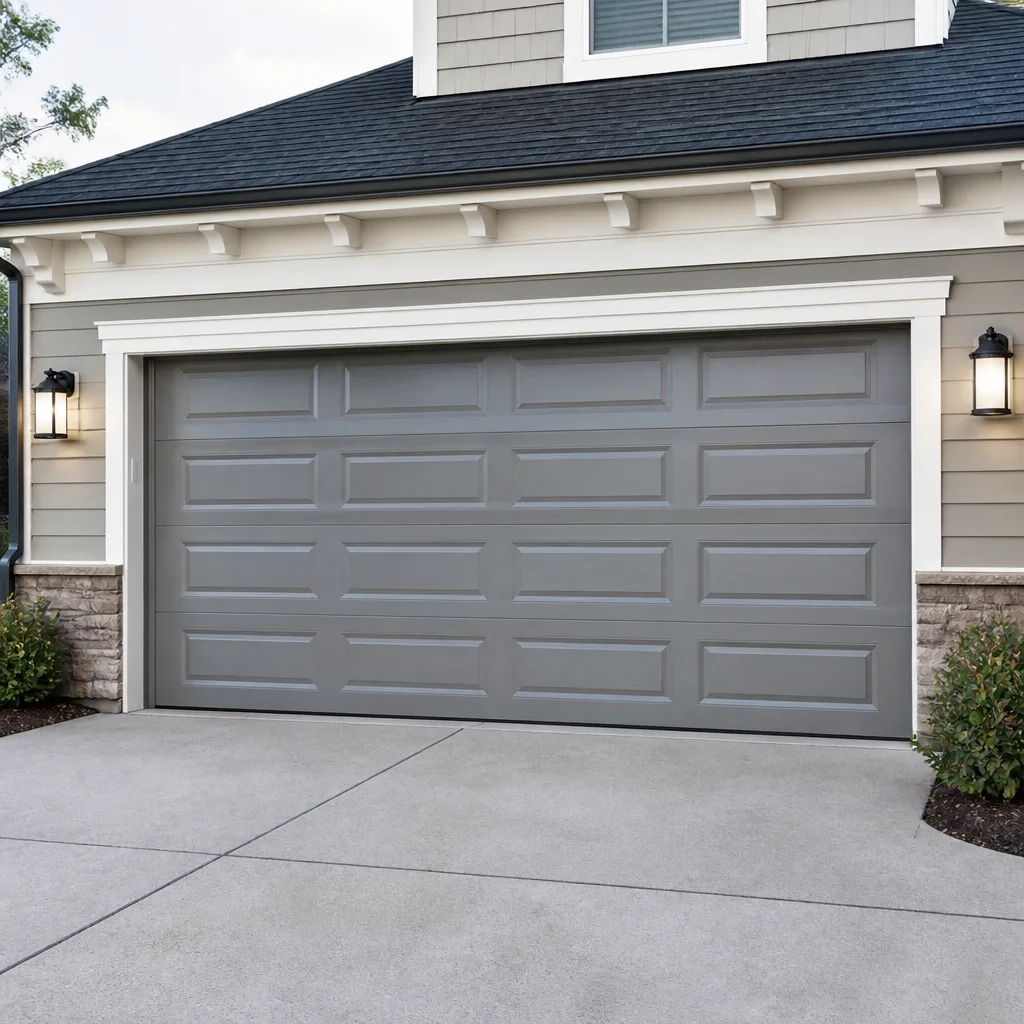 Raised-panel steel
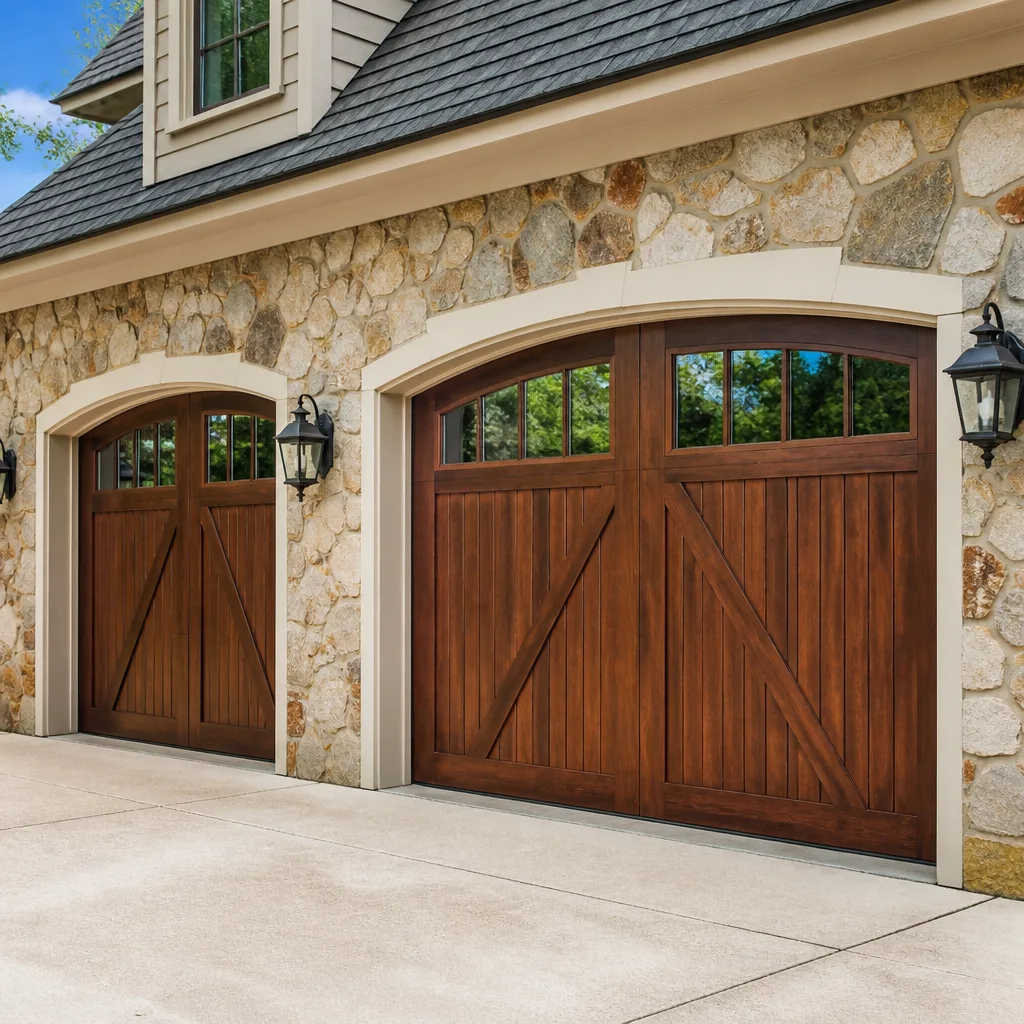 Carriage house
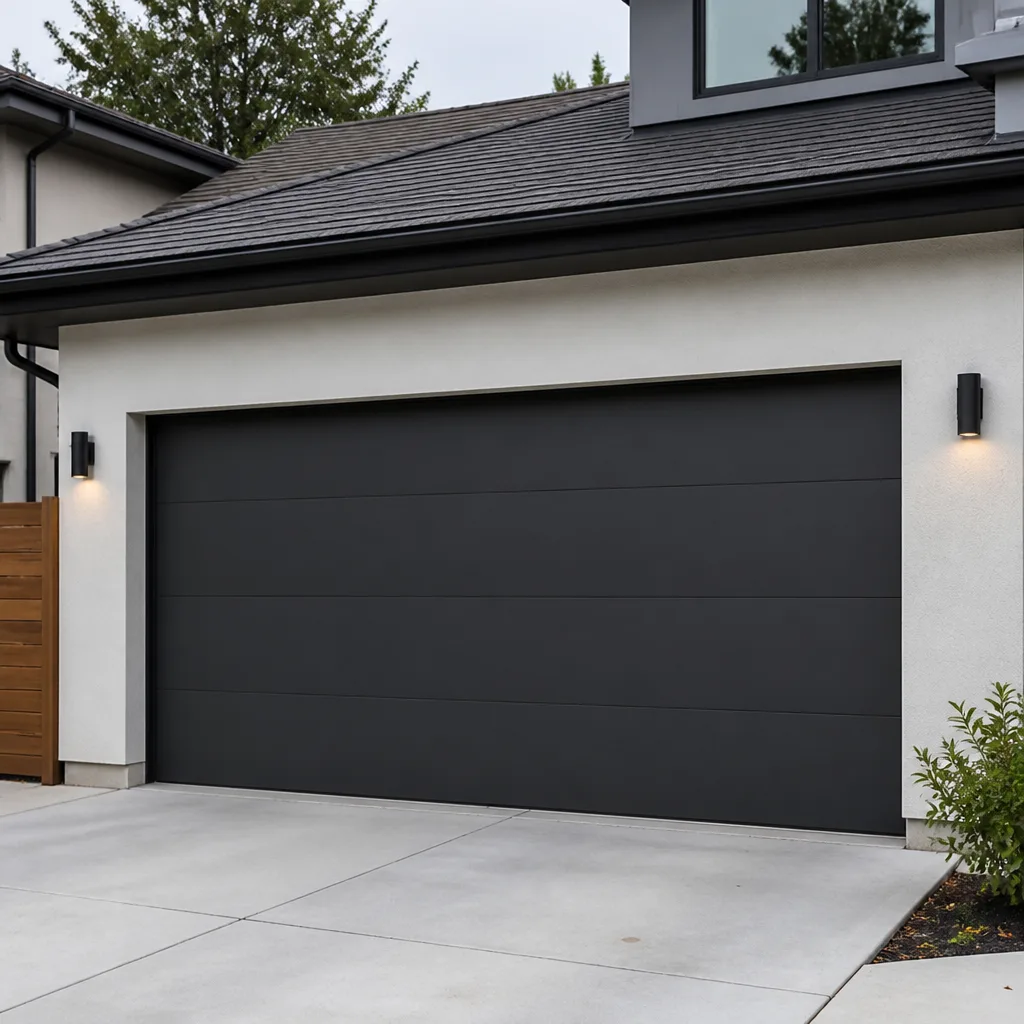 Modern flush
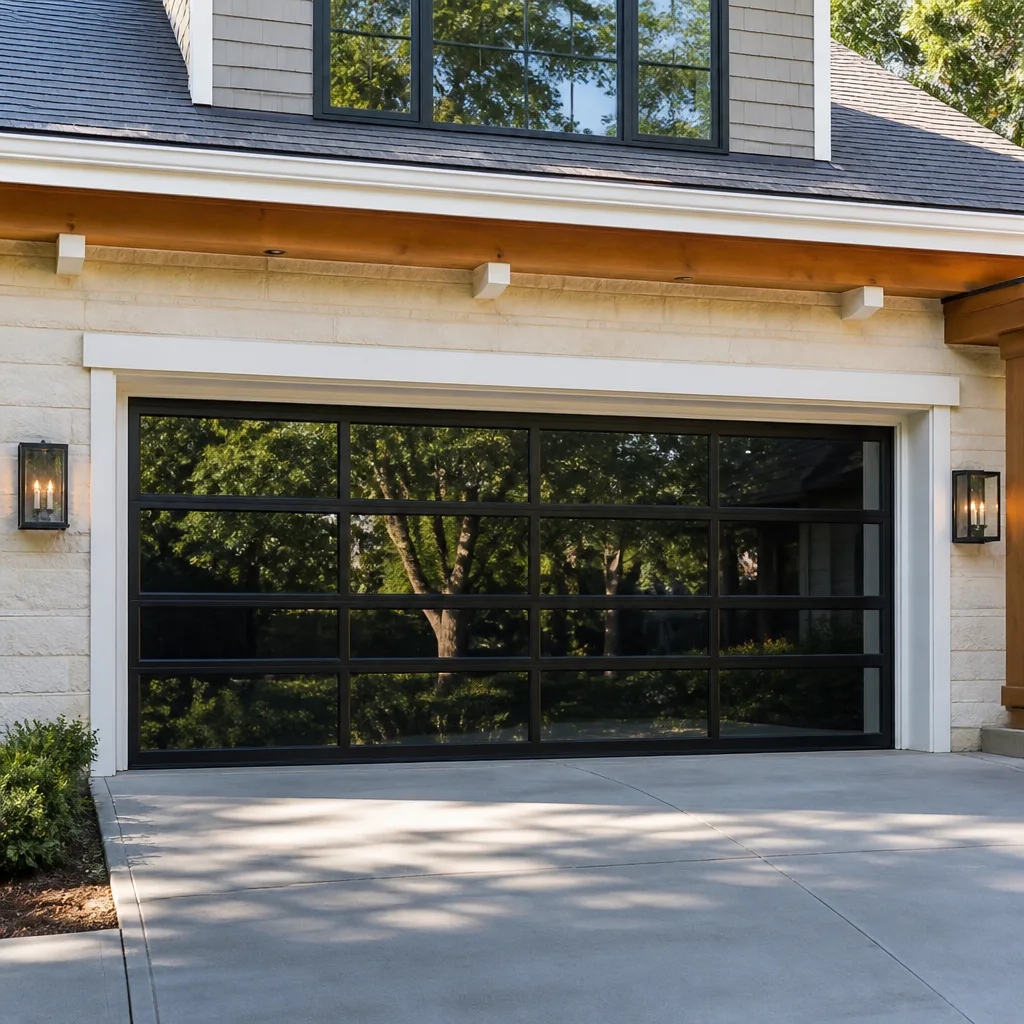 Full-view glass
 LiftMaster openers
 Chamberlain openers
Full 25-point door and opener safety check with every visit - springs, cables, rollers, tracks, and your LiftMaster or Chamberlain opener included
You get a price before we start. It does not change when the truck arrives.
Get your free estimateSeasonal Garage Door Care for Fresno: Year-Round Homeowner’s Guide
Fresno regularly strings together more consecutive 100°F days than Phoenix, and a west-facing garage door in that heat can hit surface temperatures above 140°F. That kind of sustained thermal load does things to your door that most homeowners write off as “the door just getting old.” It’s not age. It’s heat, fog, and freeze cycling that follows a calendar most national guides ignore. This guide is built around Fresno’s actual weather patterns: the May-to-September heat slog, the December-to-February Tule fog that soaks everything, and the brief hard freezes that crack dried-out weatherseal. Here’s exactly what to check, when to check it, and what it should cost when something needs fixing.
Quick Answer
Fresno garage doors need three seasonal checks per year: a pre-summer lubrication and seal inspection in April, a heat-related opener check from June through September, and a post-fog corrosion and spring inspection in late February or March. Most seasonal failures in Fresno are preventable with a $15 tube of high-temperature lithium grease, a visual check of the bottom seal, and knowing that an opener that quits in the afternoon heat is usually tripping its thermal overload, not broken. Budget $180 to $340 for a torsion spring replacement and $90 to $150 for a weatherseal replacement when you need professional help.
Styles & brands we work with
Table of Contents
- Why Fresno’s Climate Is Harder on Garage Doors Than Most Guides Assume
- April: Pre-Summer Prep Before the Heat Arrives
- June Through September: Heat-Related Opener Failures and What Actually Causes Them
- December Through February: Tule Fog, Moisture, and Corrosion
- March: Post-Winter Spring and Hardware Inspection
- Year-Round Lubrication: What Works Above 100°F in Fresno
- How to Know When a Fresno Garage Door Needs Replacement, Not Repair
Why Fresno’s Climate Is Harder on Garage Doors Than Most Guides Assume
Most seasonal home-care guides are written for places with four tidy seasons. Fresno doesn’t have those. We have a long, brutal hot season, a short wet season defined by Tule fog rather than rain, and freeze events that last just long enough to harden rubber and crack it. If you follow a generic spring-summer-fall-winter checklist, you’ll be lubricating at the wrong time, inspecting for the wrong problems, and replacing parts that failed for reasons you never addressed.
The three stress vectors that matter in Fresno are:
- Sustained heat above 95°F from May through September. This breaks down lubricating grease, overheats opener motors mounted in uninsulated garages, and warps vinyl bottom seals that sit against hot concrete.
- Tule fog moisture from December through February. The fog is dense enough to condense on metal surfaces inside the garage, accelerating rust on tracks, hinges, and spring hardware. Steel door panels with chipped paint wick moisture along the bottom edge.
- Brief hard freezes in January and February. A dried-out bottom seal has no flexibility left when the temperature drops into the 20s. It cracks instead of compressing, and that crack is exactly where fog moisture and dust get in for the rest of the year.
In our experience, the single most common seasonal repair call in Fresno neighborhoods like Woodward Park and Sunnyside is a bottom seal that failed during a winter freeze and then let in enough dust and moisture during spring that the homeowner noticed sagging, sticking, or visible light under the door by April. The fix is straightforward. The prevention is simpler: check the seal before the freeze, not after it.
April: Pre-Summer Prep Before the Heat Arrives
The first real heat wave in Fresno usually lands in May, sometimes in the 90s by mid-April. By the time it arrives, your door needs to be lubricated, sealed, and heat-adjusted. Doing this work in April means you’re not troubleshooting a stuck door in 103°F weather in July while the garage feels like an oven.
Step 1: Inspect the Bottom Seal
The bottom seal, also called the astragal, is the flexible rubber or vinyl strip along the bottom edge of the door. In Fresno’s heat, the vinyl compound hardens over time. Lift the door and run your hand along the seal. If it feels brittle, has visible cracks, or doesn’t compress against the concrete when the door closes, replace it. Light visible under the door is a clear sign the seal has failed.
Step 2: Lubricate Moving Parts
Use a silicone-based or lithium-based spray lubricant rated for high temperatures. Standard white lithium grease breaks down above 100°F and leaves a sticky residue that attracts dust. For the heat we get in Fresno, a dry-film PTFE spray or a garage-door-specific silicone lubricant holds up better. Apply to the hinges, the rollers (nylon rollers get lubricant on their bearings, not the wheel surface), the torsion spring, and the opener chain or belt. More detail on product choice is in the lubrication section below.
Step 3: Test the Opener’s Heat Sensitivity
If your opener is mounted in an uninsulated garage that faces west or south, it’s already running hot. In our experience, an opener that runs 10 to 15 cycles in a 90°F garage can show the same symptoms in May that homeowners only notice in July. Run the opener through 4 full open-close cycles with the door connected. Listen for a slowing motor, a delay at start, or an opener that stops mid-cycle. If any of those happen, the motor may have thermal protection that’s kicking in. You’ll want to deal with that before temperatures crest.
Step 4: Inspect Weatherseal Around the Frame
Check the rubber seals on the sides and top of the opening. Fresno’s summer heat isn’t just about the door panels. It widens the gap between frame and door if the wood or metal has shifted. A gap lets in hot air, dust, and insects. Replacing side weatherseal is a low-cost job and keeps your garage 10 to 15 degrees cooler during the hottest weeks.
June Through September: Heat-Related Opener Failures and What Actually Causes Them
The most common summer call we get in Fresno goes like this: “The door works fine in the morning, but it won’t open in the afternoon.” Almost always, that’s not a broken opener. That’s the thermal overload cutout inside the motor doing exactly what it’s designed to do: shutting the motor down before it burns out.
Here’s what’s happening. The opener motor generates its own heat every time it runs. When the ambient temperature in an uninsulated Fresno garage climbs above 105°F, the motor’s internal temperature crosses its safe threshold and the overload protector cuts power. The door won’t move until the motor cools. By morning, the garage has cooled enough that the opener runs normally, which is why the problem seems to disappear overnight.
The fix depends on several factors:
- Opener age: Openers older than 10 years run hotter with age. A worn capacitor or a tired motor overheats faster. Replacing the opener may be more cost-effective than fighting a thermal cutout.
- Door balance: If the door is heavy because a torsion spring has lost tension, the opener works harder every cycle, generating more heat. Checking the spring first is often the right move.
- Ventilation: An uninsulated garage door on a west-facing wall bakes all afternoon. Even a simple radiant barrier or garage door insulation kit can drop the garage temperature 10 to 15 degrees, keeping the opener inside its safe range.
- Chain tension: A chain that’s too tight adds load. A chain that’s too loose slaps and causes uneven force. Either way, the motor works harder and heats up faster.
If your door works in the morning and not in the afternoon during a Fresno heat wave, it’s almost always thermal overload, not a failed motor. Running it repeatedly in that state can turn a $90 belt adjustment into a $400 opener replacement. Let the motor cool, check the balance, and if the problem repeats on consecutive afternoons, call a professional before the opener burns out completely.
High-temperature safety note: never attempt to work on a torsion spring yourself. A torsion spring, the large coil mounted above the door, holds enough tension to cause serious injury or death if released incorrectly. This is the one component on your door you should never touch. Call a trained professional for anything spring-related.
December Through February: Tule Fog, Moisture, and Corrosion
Tule fog is the part of Fresno’s climate that most garage door guides never address. Dense, ground-hugging fog can persist for days or weeks between December and February. That fog condenses on every metal surface in your garage. It’s not as dramatic as rain, but it’s more insidious because it lingers.
Here’s what fog moisture does to specific components:
- Steel door panels: Any paint chip or scratch near the bottom of the door lets moisture reach the bare steel underneath. Over one fog season, that becomes rust. Over two or three, it becomes visible rust streaks that can’t be cleaned off.
- Weatherseal adhesion: The bottom seal is attached with adhesive or friction channels. Constant moisture works its way between the seal and the door, loosening the grip. The next time the door closes hard against a rough concrete surface, the seal peels away.
- Hardware and hinges: The zinc coating on standard hinges resists rust, but the hinge pins and roller axles don’t. Once they start to corrode, the door gets louder and stiffer to operate.
- Torsion spring and containment cable: Springs are made of oil-tempered steel and coated with a thin rust-preventative layer. That layer is not thick. Fog moisture plus a cycling spring equals surface rust, which can accelerate fatigue failure.
The practical response is to make a fog-season inspection part of your routine. Check for visible rust on the bottom rail of the door and the track hardware in January. Wipe down any surface condensation with a dry cloth. And if you notice the bottom seal starting to detach at one corner, reattach or replace it before it peels further.
For doors in neighborhoods with mature tree cover, like Fig Garden or the Tower District, you also have to consider what the fog leaves behind: fine particulate matter that accumulates on the door and gets pulled into the track channels. A wet track plus accumulated dust becomes a slurry that works its way into roller bearings. A quick track wipe-down with a dry towel during fog season prevents a lot of mid-February noise complaints.
March: Post-Winter Spring and Hardware Inspection
Cold-weather contraction is real, even in Fresno. Those January freezes may be brief, but they cycle the metal in your torsion spring through compression and expansion. Spring steel is designed to flex, but every temperature cycle moves the door’s balance point slightly. By March, this drift is measurable.
Here’s the March inspection list:
- Door balance test: Pull the manual release cord to disconnect the opener. Lift the door halfway. If it stays put without your hands on it, the spring tension is correct. If it drifts down, the spring has lost tension. If it shoots up, the spring has too much tension and someone needs to adjust it. Call a professional either way.
- Spring containment cable check: Many torsion spring setups use a safety cable that runs through the spring to contain it if it snaps. Look for fraying, rust, or slack. A rusted safety cable that fails to do its job turns a broken spring into a projectile.
- Hinge and roller inspection: Listen for grinding or squeaking during operation. Look at the roller wheels. Nylon rollers develop flat spots over time. Steel rollers get louder as their bearings wear. Worn rollers make the whole door work harder, which shortens spring life.
- Track alignment check: Look down the length of each vertical track. It should be straight and tight against the wall. Gaps, bends, or visible rust indicate a problem. A door that jumps or shudders during operation often has a track issue rather than an opener issue.
The March inspection is also the time to plan any replacement work. If you’re going to need a new door or a new opener before summer, ordering in March gets it installed before the heat arrives. Doors installed in March don’t have to deal with the thermal expansion of a 140°F panel on day one.
Year-Round Lubrication: What Works Above 100°F in Fresno
Generic white lithium grease is the most commonly recommended garage door lubricant in national guides, and for good reason: it’s cheap and widely available. It’s also the wrong choice for Fresno. White lithium breaks down at sustained temperatures above 100°F. It turns from a grease to a sticky, wax-like paste that collects dust and grit. The result is a door that starts the summer operating smoothly and ends it grinding.
For Fresno conditions, the right lubricant is a dry-film PTFE spray or a garage-door-specific silicone spray rated for high temperatures. Both hold their lubricating properties well above 120°F and don’t attract dust the way grease does. That matters in the Central Valley, where every dry summer day adds a fine layer of dust to every horizontal surface.
- Use on: hinges, roller bearings (not the roller face that contacts the track), the torsion spring, the opener chain or belt, and the lock assembly if your door has one.
- Don’t use on: the track itself. A lubricated track actually increases roller friction. The track should be clean and dry. Rollers glide on it because of their bearings, not because the track is slick.
- Frequency in Fresno: Lubricate every 6 months in a garage with good ventilation. Lubricate every 3 to 4 months if your garage is uninsulated and west-facing, because the heat breaks down lubricant faster. That’s a March/July schedule rather than a generic “twice a year.”
We recommend applying lubricant in the morning, before the garage heats up. A warm door absorbs lubricant better than a cold one, but a hot door accelerates evaporation. Target a mild day in the 60s or 70s when possible.
How to Know When a Fresno Garage Door Needs Replacement, Not Repair
Seasonal maintenance extends the life of a garage door, but it can’t extend it forever. In Fresno, the decision point usually arrives after 15 to 20 years for a builder-grade steel door, or sooner if the door has faced west with no shade for all those years.
Here are the replacement signals we recommend watching for:
- Visible rust through the paint on more than one panel. Surface rust can be sanded and repainted. Rust that has perforated the steel cannot be repaired.
- A warped bottom panel from repeated contact with hot concrete and expansion stress. A warped panel prevents the bottom seal from sealing, which creates a permanent gap even with a new astragal.
- Insulation that no longer insulates. Polystyrene insulation breaks down over time. If your garage stays hot in summer despite a functioning seal and closed door, old door insulation may be the problem.
- Structural stress cracks at hinge attachment points. Hairline cracks in the steel around hinges mean the panel is weakening. This is a failure waiting to happen, and it’s cheaper to replace the door before a panel breaks and the door jams halfway.
- Repair frequency. If you’ve replaced two springs and an opener in the last three years, the door itself is the common denominator. Replacing the door resets the clock on all the components that attach to it, including the springs, which are often worn into the door’s balance system by that point.
Most Fresno replacement doors installed in the last decade are Amarr or Wayne Dalton products, with Raynor and Craftsman showing up in older builds. All three major brands offer panels with Vinyl-bonded insulation ratings that hold up to our heat. If you’re replacing, consider a higher R-value and a lighter color. Lighter colors reflect more heat, and in a city that hits 105°, that’s a meaningful daily difference.
For more detail on choosing a door, see our garage door installation guide for Fresno homeowners.
Common Mistakes to Avoid
- Using WD-40 as a lubricant. WD-40 is a solvent and degreaser, not a lubricant. It will strip the existing grease from your hinges and leave the metal unprotected. Use a dry-film PTFE or silicone spray instead.
- Lubricating the track. The track should be clean and dry. Lubricating it makes the rollers slip rather than grip, which changes how the door tracks and can cause the door to bind in the vertical section.
- Ignoring a door that only fails on hot afternoons. Thermal overload protection is warning you that the motor is stressed. Continuing to use the door by waiting for it to cool eventually burns out the motor or the capacitor. A $90 belt adjustment or door balance fix now beats a $400 opener replacement later.
- Replacing the bottom seal without cleaning the channel first. The old seal often leaves behind a residue that prevents the new seal from seating properly. Clean the channel thoroughly before inserting the new astragal, or it will peel away within weeks.
- Assuming spring “drift” means the spring is failing. Torsion springs naturally lose a small amount of tension over their life. A half-inch drift in 6 months is normal wear. A door that won’t stay open is a real problem. Don’t over-adjust based on a single check; measure over time.
- Using the same lubricant year-round without checking its heat rating. The grease that kept your door smooth in November may be useless by June. Switch to a high-temperature formulation before the first real heat wave.
- Forgetting the opener’s emergency release during fog season. The release cord hangs down from the rail. In damp weather, the cord itself can become brittle if it’s old, and yanking it hard can snap it. Test the release once per season with a gentle pull.
See the difference
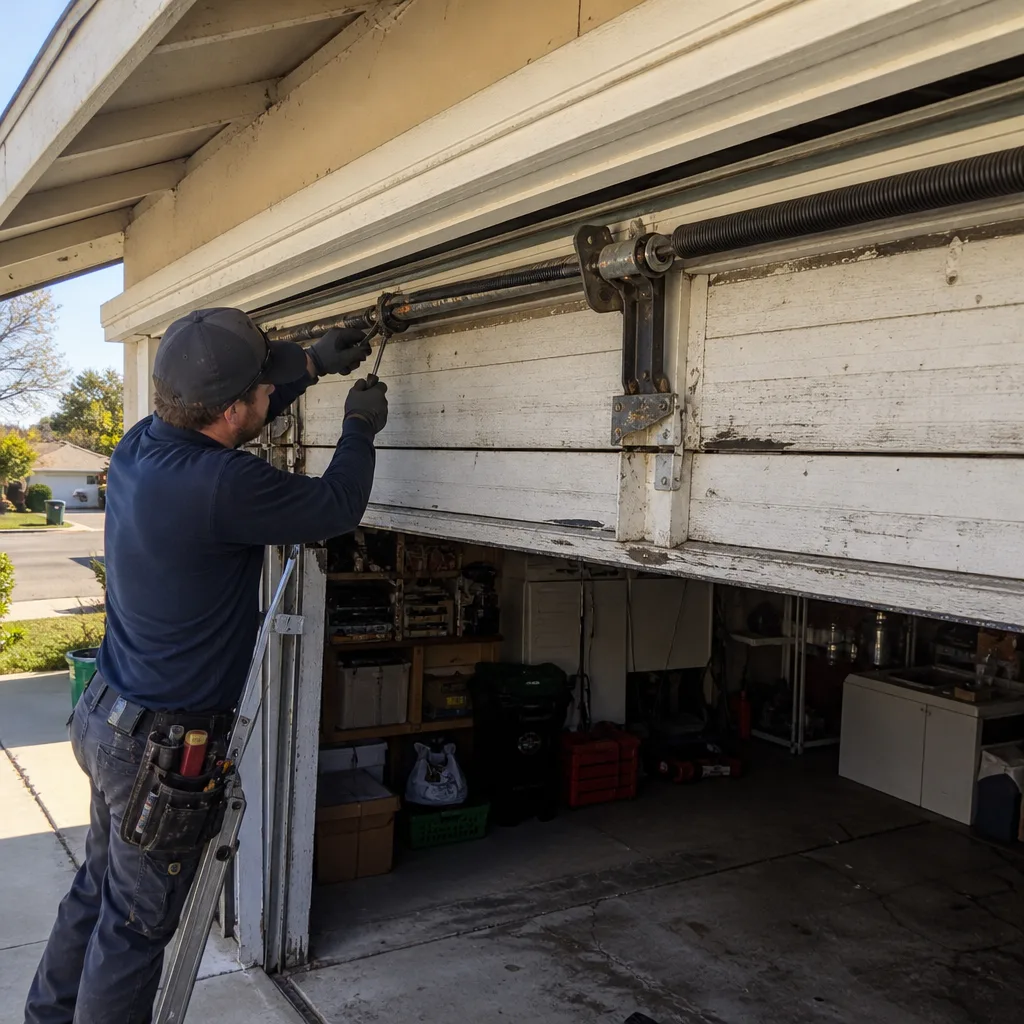 Before
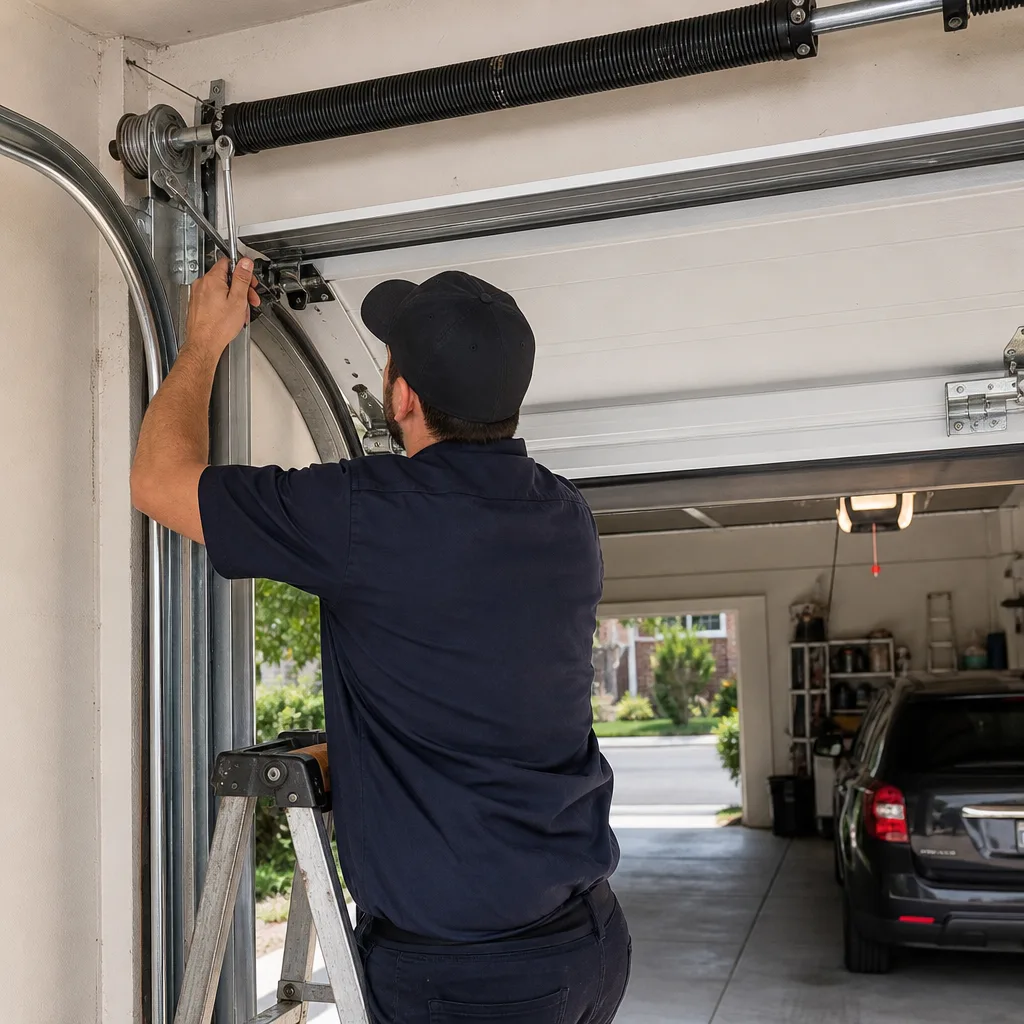 After
After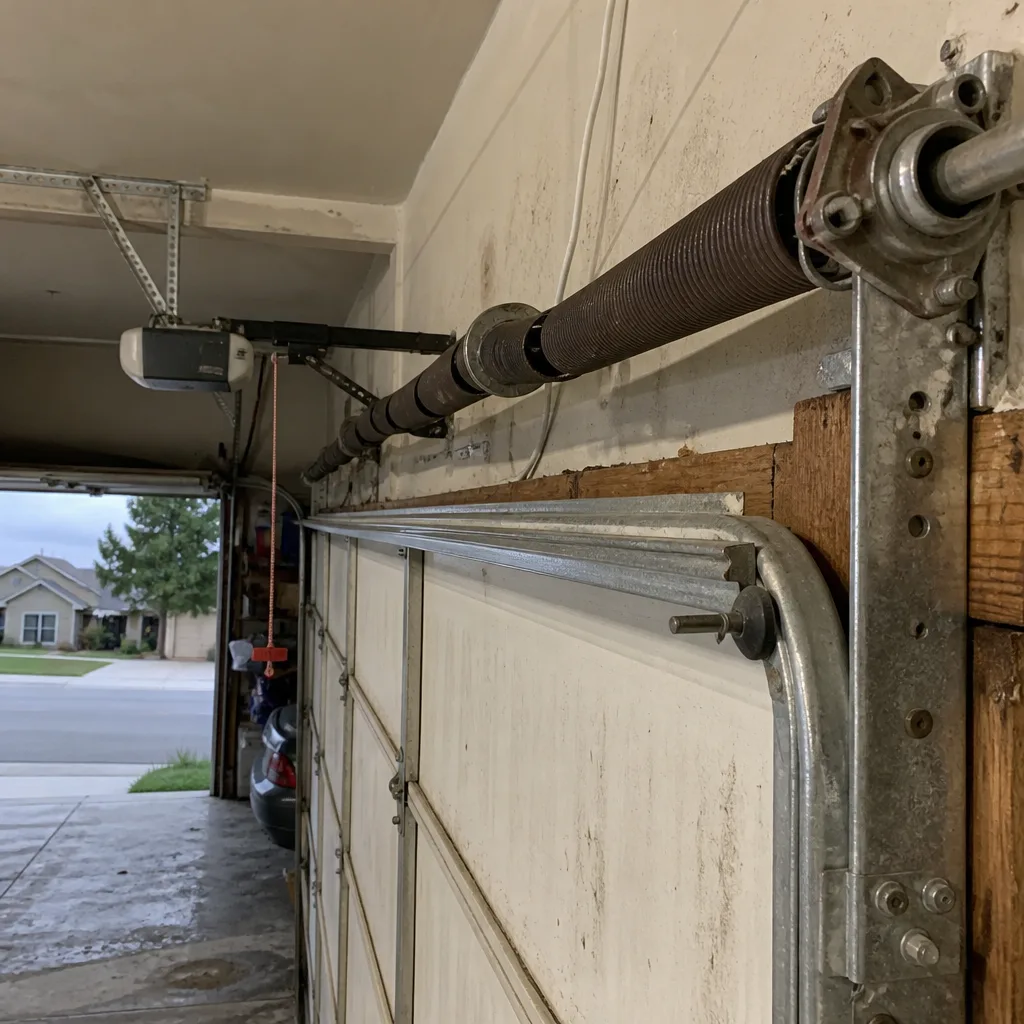 Before
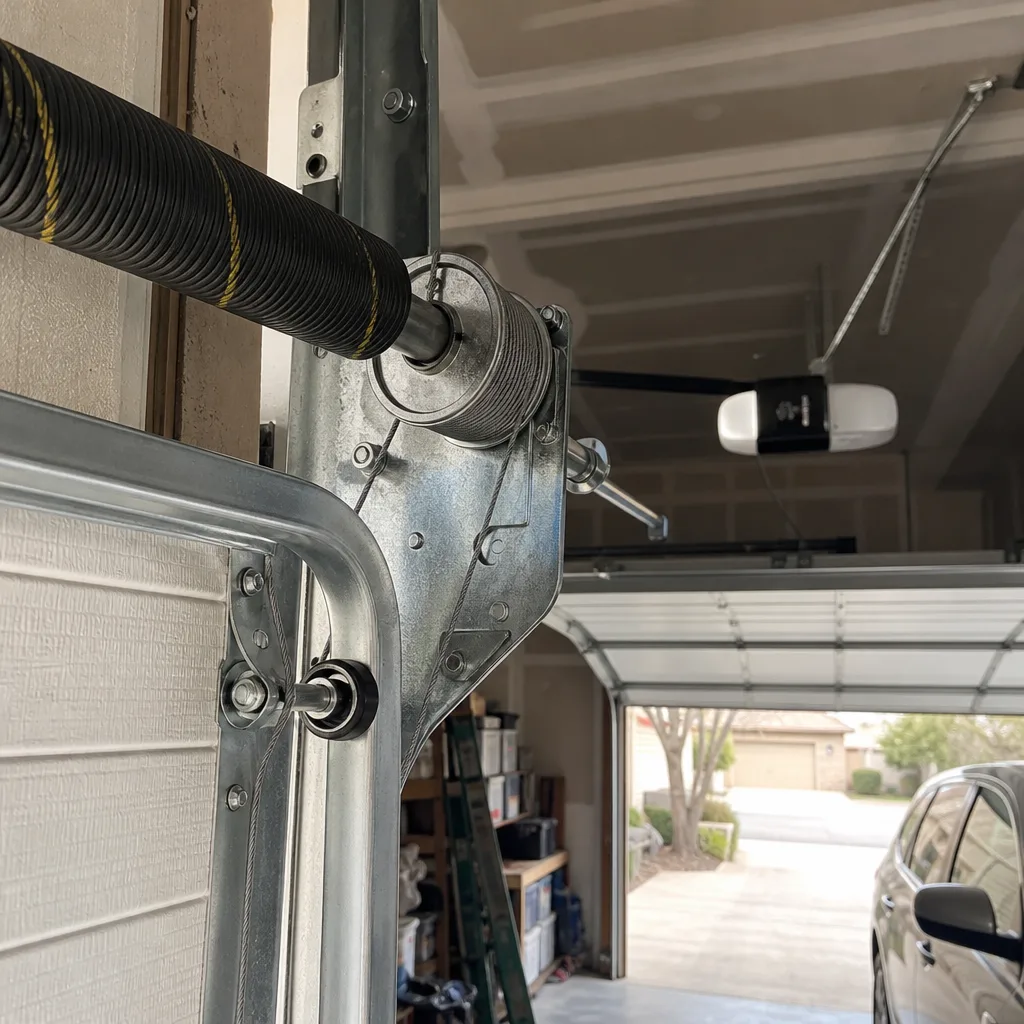 After
After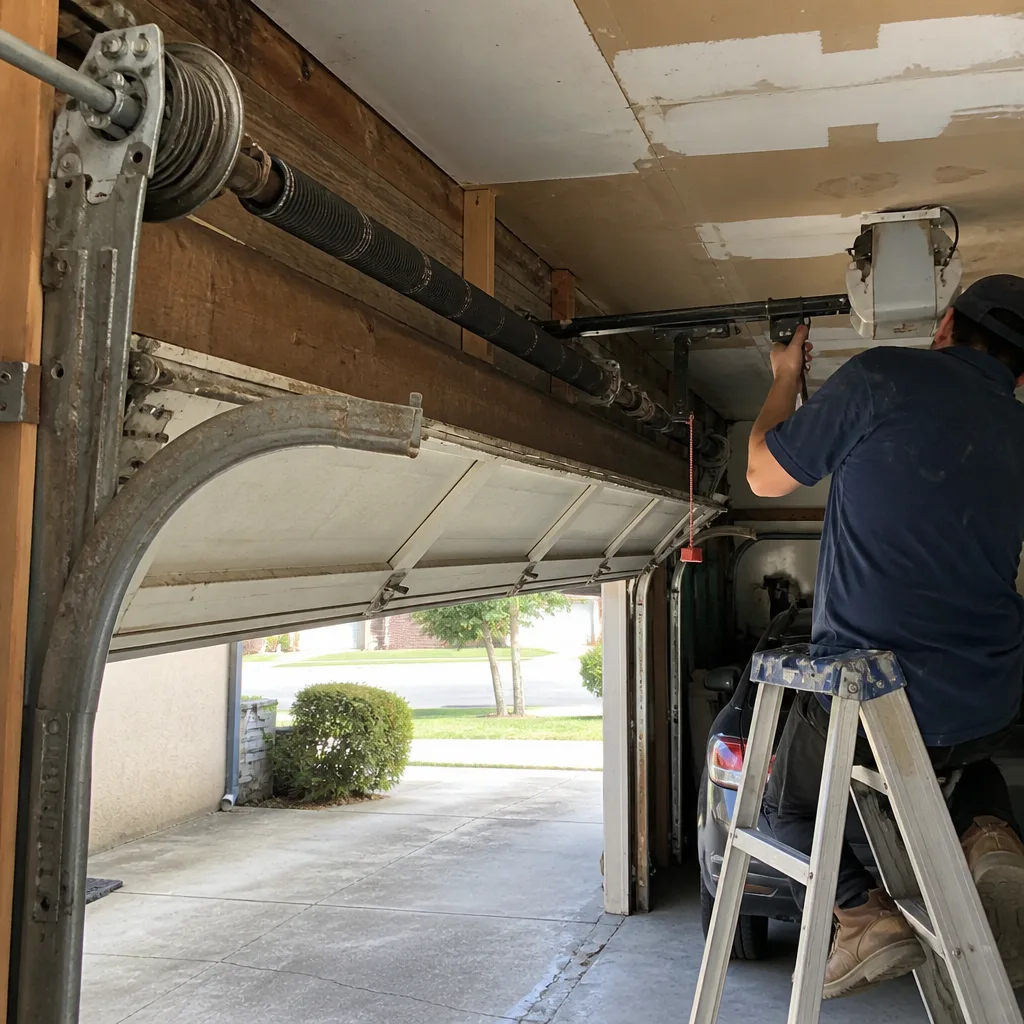 Before
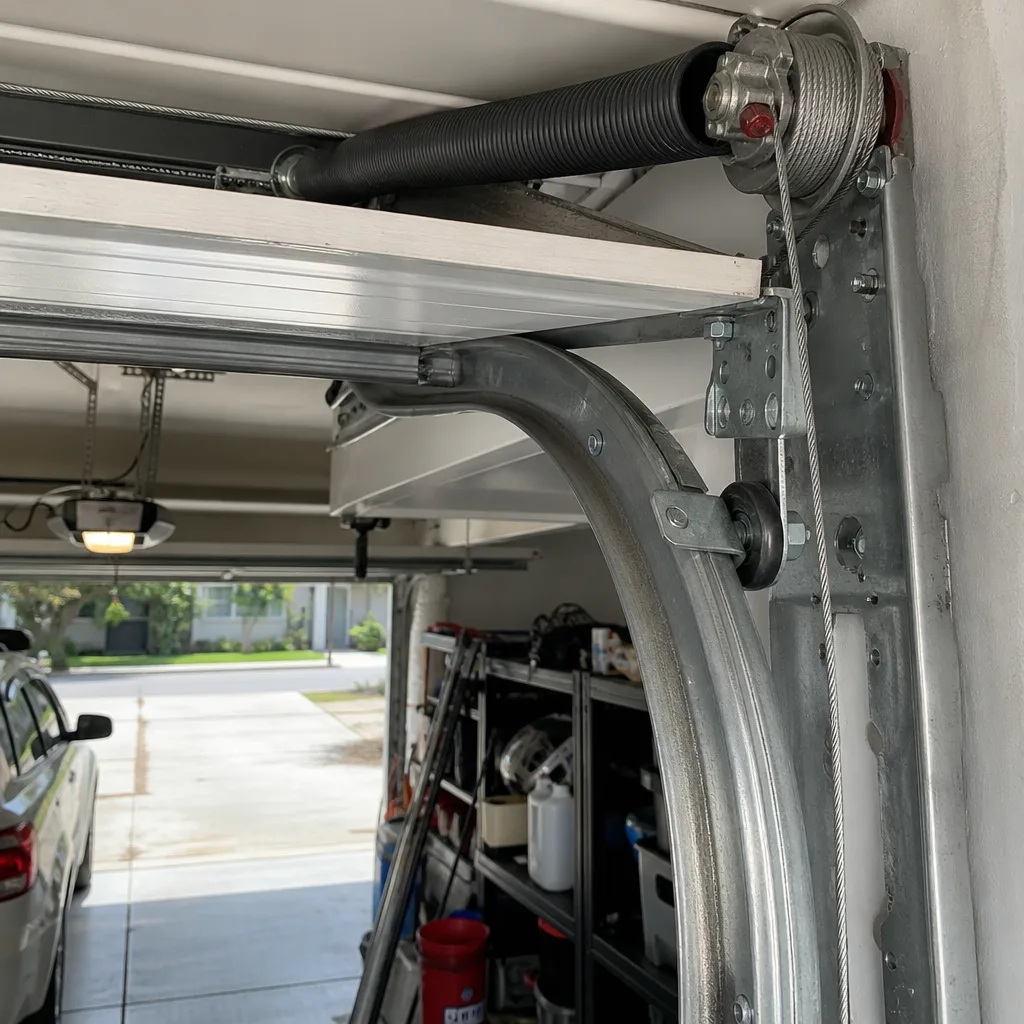 After
AfterWhen to Call a Professional
Some jobs are maintenance. Some are professional work. If your torsion spring has visible rust, a gap, or is making a louder-than-normal popping sound during operation, call a professional. That component is under extreme tension and a failed spring can cause serious injury. The same goes for any track repair, any door balance adjustment, or any opener replacement involving new wiring. A door that’s heavy, jerky, or loud during operation is telling you something about the spring system that requires a trained eye to diagnose safely.
Doyle Garage Doors Fresno offers free estimates throughout Fresno and surrounding areas. Call (559) 475-9590 and a live person answers, day or night, weekends and holidays included.
Frequently Asked Questions
Torsion spring replacement in Fresno typically runs $180 to $340 depending on the spring size, door weight, and whether you choose standard or high-cycle springs rated for more than 10,000 cycles. High-cycle springs cost more upfront, usually $50 to $80 extra, and are worth it in Fresno’s heat, where standard springs fatigue faster. Doyle Garage Doors Fresno writes the price down before any work starts and includes a 365-day guarantee on the repair. Call (559) 475-9590 for an exact quote.
That’s almost always the thermal overload cutout in the opener motor tripping when the garage interior temperature exceeds the motor’s safe operating threshold. The motor resets after it cools, which is why it works again in the morning. The fix may be as simple as adjusting the door balance so the opener works less hard, or it may require improving garage ventilation. Call a professional to diagnose before the overload mechanism wears out.
Every 3 to 4 months if your garage is uninsulated and west-facing, and every 6 months if your garage stays cooler or is shaded. Use a high-temperature dry-film PTFE or silicone spray, not white lithium grease, which breaks down above 100°F. Apply to hinges, roller bearings, the torsion spring, and the opener chain or belt. Never lubricate the track.
Bottom seal replacement is a manageable DIY job for many homeowners, especially if the old seal slides out of a channel track. The key is cleaning the channel thoroughly before inserting the new seal. That said, if the seal is glued or crimped, or if the bottom panel is warped, you’ll get a better result from a professional. Doyle Garage Doors Fresno handles seal replacements during service calls and includes the written price up front.
Look for a visible gap in the spring coil, rust on the spring surface, or a door that’s become noticeably harder to lift manually. Also, run the balance test: disconnect the opener and lift the door halfway. A balanced door holds its position. A door that drops or rises sharply indicates spring trouble. Do not attempt to adjust or replace a torsion spring yourself. It holds enough tension to cause serious injury.
Worn gears, faulty limit switches, and damaged capacitors are repairable on most openers. But if the motor itself is failing, if the opener is more than 12 to 15 years old, or if it’s overheating every summer, replacement is usually the better investment. A modern opener with a DC motor runs cooler and quieter. Doyle Garage Doors Fresno repairs and replaces all opener brands, including LiftMaster, Chamberlain, and Genie, and will give you a written price before any work begins. Call (559) 475-9590 to schedule.
The Bottom Line
Fresno’s garage door problems follow a rhythm: heat stress in summer, moisture in Tule fog season, and seal failure during brief winter freezes. If you check the bottom seal in April, monitor for thermal overload from June through September, wipe down hardware during fog season, and inspect the spring and balance in March, you’ll catch most problems before they become emergencies. Use a high-temperature lubricant, not white lithium grease. And when a torsion spring, track, or opener issue crosses into dangerous territory, call a professional who writes the price down before the work starts.
Doyle Garage Doors Fresno, part of the Threshold Group family, has served Fresno since 2001. Every technician is background-checked and identity-verified under the Threshold Standard, and we send you the technician’s name and photo before arrival. Every repair includes a written 365-day guarantee and a free second visit if the repair fails. Call (559) 475-9590 today for a free estimate, or to schedule a seasonal inspection. A real person answers, 24 hours a day, every day of the year.
Written by Aaron Teague, Owner at Doyle Garage Doors Fresno, serving Fresno since 2001.