
Last updated October 16, 2026
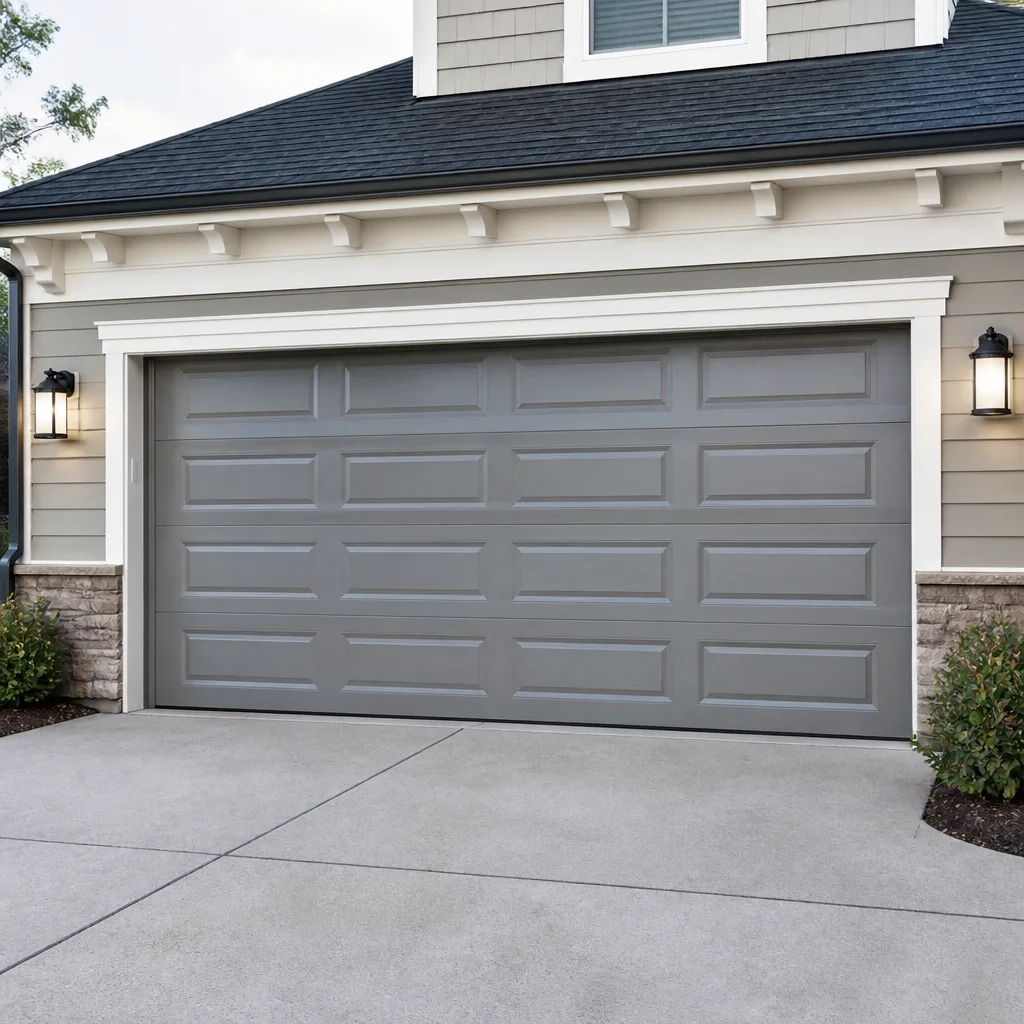 Raised-panel steel
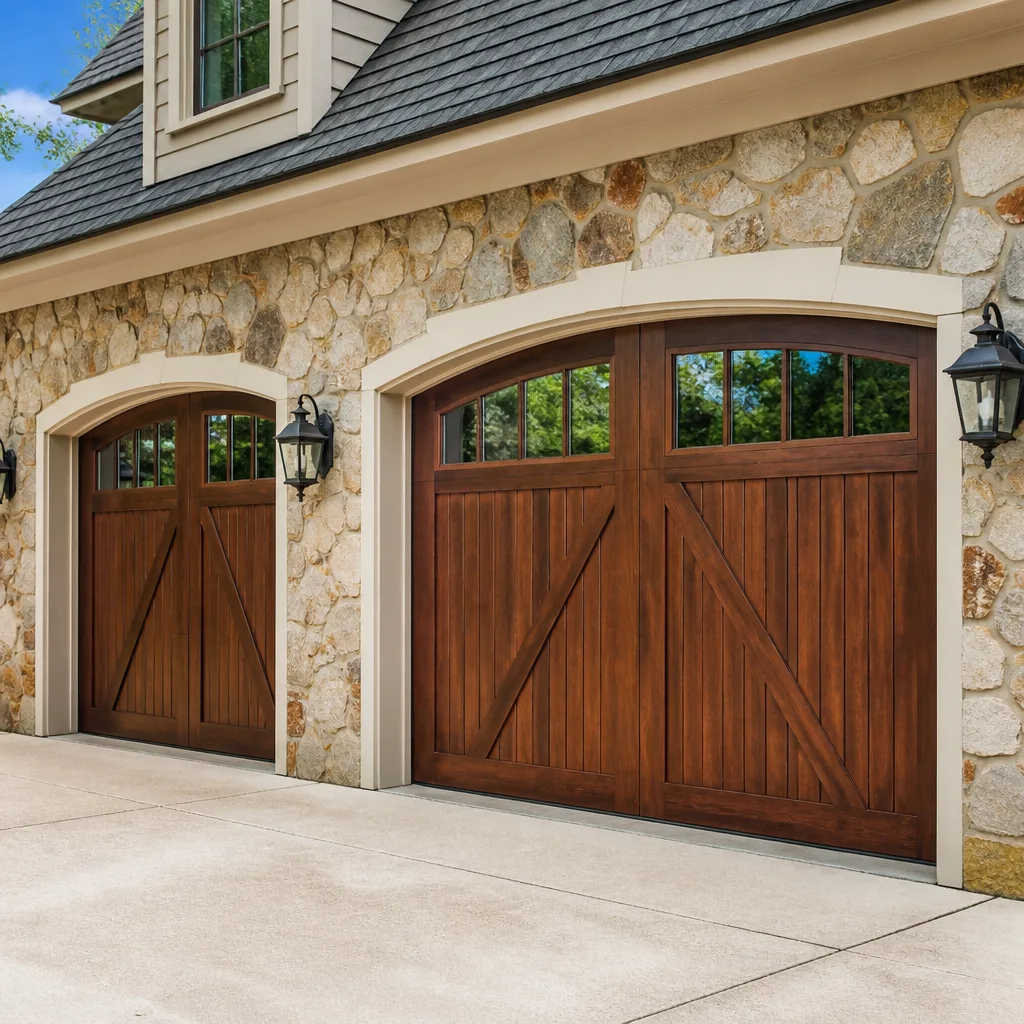 Carriage house
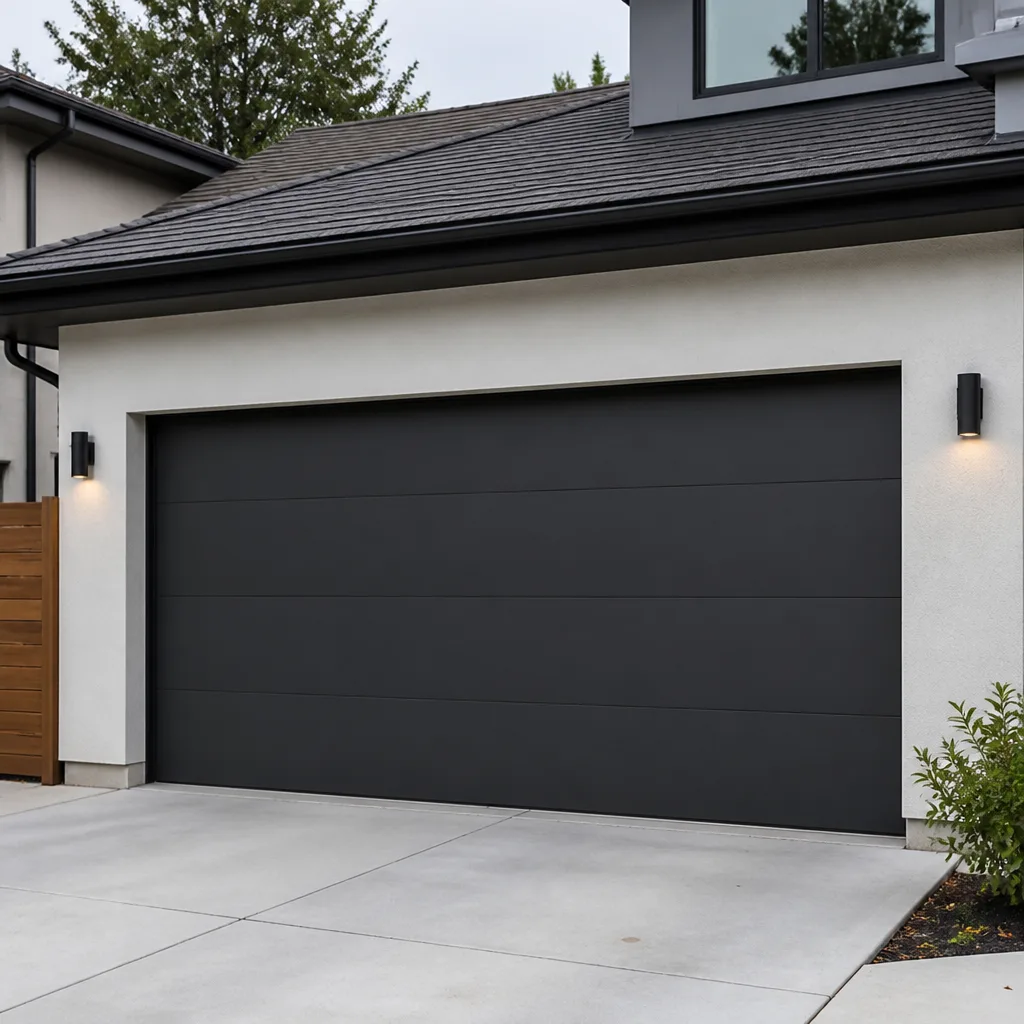 Modern flush
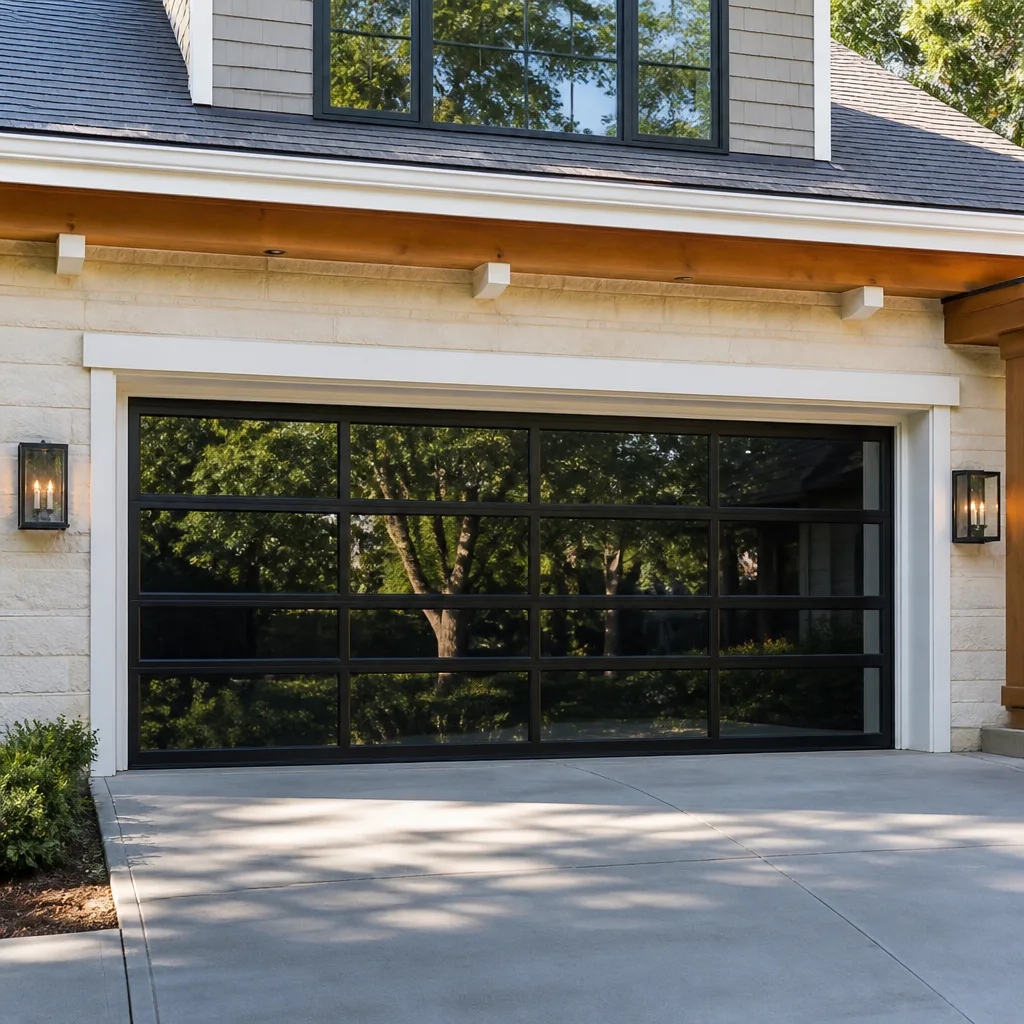 Full-view glass
 LiftMaster openers
 Chamberlain openers
Full 25-point door and opener safety check with every visit - springs, cables, rollers, tracks, and your LiftMaster or Chamberlain opener included
You get a price before we start. It does not change when the truck arrives.
Get your free estimateGarage Door Permits, Codes & Inspections in CA: What You Need to Know
A garage door replacement that skips a required permit in California can surface years later on a property disclosure as an “unpermitted improvement,” triggering buyer demands for retroactive inspection or price concessions. That paperwork problem costs far more than the permit ever would have. This guide maps exactly when a permit is required in Fresno and across California, what the inspection covers, and how to remediate a skipped permit before you list your home. For Garage Door Repair Maintenance Checklist for Fresno Homeowners, see our dedicated resource. We’ve walked hundreds of Fresno homeowners through this process since 2001, and we’ll tell you what actually happens, not what the generic home-improvement articles copy from each other.
Quick Answer
A building permit is required for a garage door replacement in California when the project changes the door size, alters the header or load path, or upgrades from a non-rated door to a wind-rated door with different structural requirements. A like-for-like swap of a standard residential sectional door, with no structural changes, typically does not require a permit. In Fresno, the threshold is set by the California Residential Code with local amendments, and the city enforces it through final inspections and property transfer disclosure reviews.
Styles & brands we work with
Table of Contents
- When a Garage Door Permit Is Required in California
- What Fresno Specifically Requires for Garage Door Work
- Title 24 Wind Load Requirements and What the Door Label Means
- What a Fresno Building Inspector Checks on a Garage Door
- Who Pulls the Permit: Contractor or Homeowner?
- How to Check If a Previous Door Was Permitted
- Remediating an Unpermitted Garage Door Before You Sell
- Common Mistakes to Avoid
- When to Call a Professional
- Frequently Asked Questions
When a Garage Door Permit Is Required in California
The California Residential Code (CRC), specifically section R105, governs when a building permit is required for garage door work. The rule of thumb is straightforward: if the work is a direct replacement in kind, with no change to the opening size, no structural alteration, and no change in wind load classification, you generally do not need a permit. If any of those three factors change, you do.
Here is the breakdown of what triggers a permit:
- Change in door size or opening dimensions: Widening or heightening the rough opening means new framing, new headers, and a different load path. This always requires a permit.
- Header alteration or replacement: If the existing header beam above the door is undersized, damaged, or needs to be replaced to carry a heavier door, that is structural work requiring a permit.
- Wind load reclassification: If you are upgrading from a standard door to a wind-rated door that anchors to the building differently, the new anchoring pattern and forces on the structure require design review and a permit.
- Converting a carport to an enclosed garage: This is a change of use and a structural addition, which always requires a full permit package.
- Electrical work for a new opener circuit: Adding a new dedicated circuit or relocating wiring requires an electrical permit, often pulled alongside a building permit.
In our experience installing doors across Fresno neighborhoods from Woodward Park to the Tower District, the majority of straightforward like-for-like replacements do not need a permit. But here is the nuance most guides skip: the decision hinges on what the existing door actually is. If a previous homeowner installed a non-rated door where a wind-rated door was originally specified, replacing it “in kind” perpetuates a code violation. The new door needs to meet current wind load requirements for the location, and that change can trigger a permit.
Aaron Teague, owner at Doyle Garage Doors Fresno, puts it this way: “The permit question is rarely about the door itself. It is about whether the structure behind the door is being changed or whether the new door imposes different forces on that structure. Most homeowners get surprised when the answer is yes to the second part.”
What Fresno Specifically Requires for Garage Door Work
Fresno operates under the California Building Standards Code with local amendments adopted by the city’s Building and Safety Division. The city does not publish a garage-door-specific permit guide for homeowners, which is why so many Fresno homeowners only learn the rules during a home sale inspection, when a contractor raises a red flag, or when they consult our Garage Door Warning Signs: A Fresno Homeowner’s Reference Guide.
Here is what we know from working in Fresno since 2001 and dealing with the city’s plan check and inspection process on behalf of customers:
Replacement in Kind: No Permit Required
If the new door matches the size, weight class, and wind load rating of the existing door, and no framing is altered, Fresno does not require a building permit. This covers the vast majority of residential sectional garage door replacements in Fresno, including doors in older subdivisions like Fig Garden and newer master-planned communities like Harlan Ranch in Clovis.
Change in Size or Header: Permit Required
If the rough opening changes by even a few inches, or the header needs to be resized, Fresno requires a building permit. The plan check will review the header specification, the king stud and jack stud configuration, and the connection details at the top plate. This is structural work, and Fresno inspectors take it seriously because a failed header can compromise the entire roof load above the garage.
Wind Load Verification: Documentation Required
Fresno sits in a moderate wind zone, but the California Energy Code and the CRC still require wind load verification for garage doors. If you are replacing a door and the existing door has no visible wind load label, the inspector may require the new door to be rated for the site’s exposure category. This is where a knowledgeable contractor who pulls the right documentation makes the process smooth.
For a broader look at how Fresno garage door projects work, including the permit implications of different door types, see our guide to garage door repair in Fresno. And if you are planning a full replacement rather than a repair, our garage door installation in Fresno page walks through the process step by step.
Title 24 Wind Load Requirements and What the Door Label Means
California’s Title 24 Building Energy Efficiency Standards get most of the attention, but the structural side of Title 24 includes wind load requirements that directly affect garage door selection. Every garage door sold in California carries a wind load label, and understanding that label tells you whether your door is legal for its location.
The label typically shows a design pressure rating measured in pounds per square foot (psf), such as “DP-15” or “DP-25.” Here is what those numbers mean in plain English:
- The number after “DP” is the design pressure: the amount of wind force the door is engineered to withstand without structural failure. A DP-15 door handles 15 pounds per square foot of wind pressure.
- The label also lists the maximum door size for that rating: a door rated DP-15 for a 16-foot-wide opening may not be rated for a 20-foot-wide opening. Size changes the math.
- Anchoring requirements are embedded in the rating: higher DP doors require stronger track brackets, heavier hinges, and more anchor bolts into the framing. Replacing a DP-15 door with a DP-30 door changes the anchoring pattern, which is precisely when a permit enters the picture.
In the Central Valley, Fresno’s exposure category is lower than coastal zones like San Francisco or Los Angeles, but the city still sits in a region where high-wind events occur. The 2015 wind map used by the CRC places Fresno in Exposure B for most residential neighborhoods, which means shielding from surrounding structures and trees. But homes in more open areas, particularly newer developments with minimal tree cover in southeast Fresno, can fall into Exposure C, which carries tougher requirements.
What this means practically: when we replace a door in a southeast Fresno neighborhood like Sunnyside or in the new developments around the Fancher Creek corridor, we verify the site’s exposure category and match the wind load rating accordingly. A door that was legal on a tree-lined street in the Tower District may not be legal on an exposed lot in southeast Fresno.
The thicker gauge steel in a Raynor or Clopay wind-rated door adds cost, typically $200 to $600 over a comparable non-rated door. It is not optional in some locations, and finding out after the door is installed is the worst possible time to learn that lesson.
What a Fresno Building Inspector Checks on a Garage Door
When a garage door project does require a permit in Fresno, the final inspection covers specific items. Here is the checklist, in the order an inspector typically walks through it:
- Header span and bearing: The inspector verifies the header material, size, and end bearing condition match the approved plans. A sagging or undersized header fails immediately.
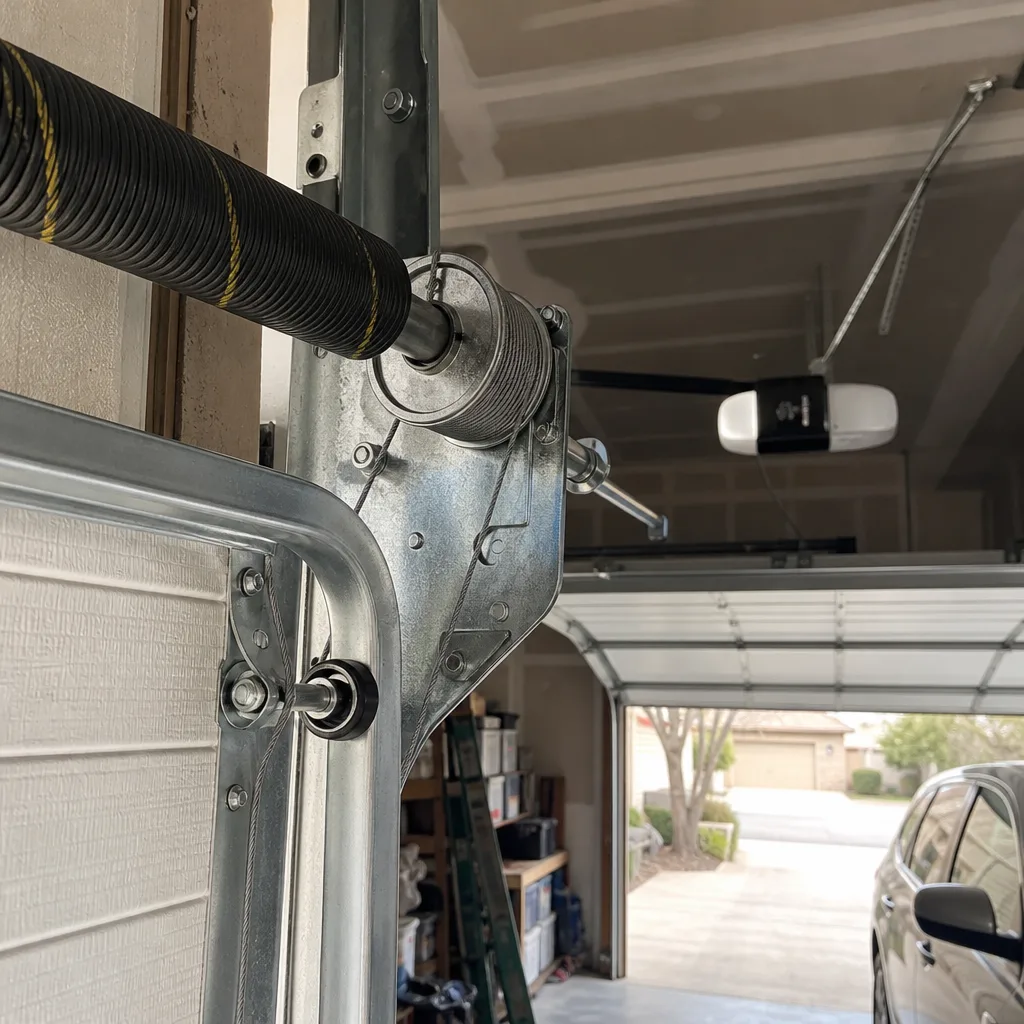
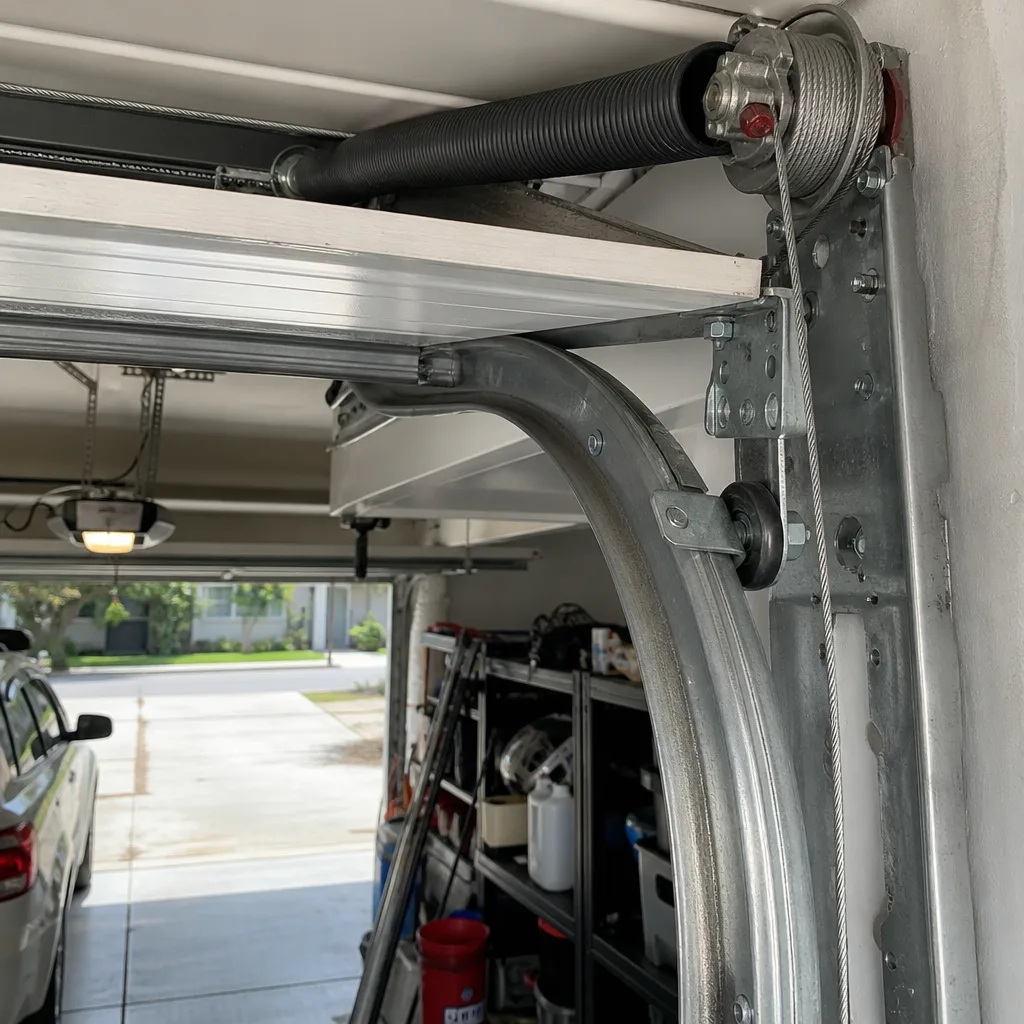
- Spring containment cable: The inspector checks that the torsion spring, the large coil mounted above the door that does most of the lifting, has the required safety containment cable running through its center. This cable catches a broken spring before it can fly across the garage and injure someone.
- Opener safety reverse: The inspector tests the automatic reverse mechanism on the opener. The door should reverse when it strikes a two-inch block placed on the floor, sometimes a 2×4 laid flat, depending on the specific test method. The electric eye sensors must also be present, mounted within six inches of the floor, and functioning.
- Track and bracket anchoring: The vertical and horizontal track brackets must be anchored into solid framing or into specified blocking, not drywall alone. Loose or wobbling tracks are a red flag.
- Door balance test: The inspector may manually lift the door halfway and check that it stays in place when released. A door that drops closed or flies open has a spring tension problem and fails the balance test.
- Fire separation compliance: If the garage shares any walls with living space, the inspector verifies the fire-rated door and frame assembly presence where applicable, including any man-door between garage and house.
The spring containment cable deserves emphasis because most homeowners do not know it exists, and it is among the most common reasons a Fresno inspection fails. The torsion spring stores an enormous amount of energy, enough to send a heavy steel spring through drywall if it breaks without containment. This is not a DIY item. The tension involved can cause serious injury, and we always recommend a trained professional handle any torsion spring work.
For opener-specific safety checks and what a technician reviews when setting up a new LiftMaster or Genie unit, our page on garage door opener repair in Fresno covers the topic in detail.
Who Pulls the Permit: Contractor or Homeowner?
In California, the legal responsibility for obtaining a required building permit falls on the property owner, but the practical responsibility is often shared with the contractor. Here is how it works in Fresno:
- The property owner is ultimately liable: California law makes the property owner responsible for ensuring required permits are obtained. If a contractor skips a permit and the owner does not verify, the owner is still the one who faces consequences at sale time.
- Licensed contractors are required to pull permits for work they perform: A licensed contractor who performs work requiring a permit without obtaining one is violating the Contractors State License Board rules. This can result in discipline against the license.
- Some contractors deliberately frame work as “no permit needed” to lower the bid: This is a known pattern in the garage door industry. A bid that comes in suspiciously low may reflect skipped permit costs, skipped wind load compliance, or both.
- Homeowners acting as owner-builders can pull their own permits: This is legal in California for work on a primary residence, but it places the responsibility for proper installation squarely on the homeowner. If the work fails inspection, the homeowner is also the contractor in the eyes of the city.
The cleanest arrangement: ask any garage door contractor in Fresno point-blank whether the planned work requires a permit, and get the answer in writing. Our How to Hire a Garage Door Contractor in Fresno: A Step-by-Step Guide explains exactly what to look for. If the answer is “probably not,” ask for the specific code section that exempts the work. That conversation separates contractors who know California building codes from contractors who are guessing.
How to Check If a Previous Door Was Permitted
If you bought a Fresno home and are not sure whether the existing garage door was permitted, here is how to verify before it becomes an issue:
- Check the city’s online permit portal: Fresno’s Building and Safety Division maintains an online permit search. Enter your address and look for any garage-related permits in the property history. Most cities, including Fresno, show permits from the last 15 to 20 years online.
- Look for an inspection sticker on the door or opener: Some cities place a small inspection approval sticker near the door track or on the opener unit. Not all jurisdictions do this, but Fresno’s inspectors sometimes leave a tag.
- Request the property’s permit history from the city: For older records or to be thorough, submit a public records request or visit the Building and Safety Division counter in downtown Fresno. There may be a small fee for printed records.
- Ask the previous owner’s real estate agent: The seller’s disclosure documents often note recent improvements. If the garage door was replaced in the last few years and no permit appears, that is worth investigating.
- Match the door’s characteristics to its era: If the home was built in the 1980s but the door has modern safety features like an electric eye and a newer wind load label, the door was replaced. Whether the replacement was permitted is the open question.
If the search reveals no permit for a door that should have had one, do not panic. The remedy is a retroactive permit, covered in the next section.
Remediating an Unpermitted Garage Door Before You Sell
California’s residential real estate disclosures require sellers to list any work done without permits. You can not legally claim ignorance if the unpermitted door is visible. Here is the remediation path in Fresno:
- Hire a contractor to assess the installation against current code: The contractor checks the door size, wind load rating, header condition, spring containment cable, and opener safety reverse function. Any deficiencies are documented.
- Apply for a retroactive permit with Fresno Building and Safety: The city processes retroactive permits for existing work. The process is similar to a standard permit, but the plan check focuses on whether the installed work meets code. If it does not, corrections are required before the permit is issued.
- Complete any required corrections: This is the “make it right” step. It might mean upgrading the door to a wind-rated unit, adding a spring containment cable to a torsion spring installation that lacks one, or replacing an undersized header.
- Schedule and pass the final inspection: The inspector reviews the work against the retroactive permit and signs off if compliant. You then have a permitted, documented garage door.
- Keep the paperwork for the sale: The permitted status and inspection sign-off become part of your property documentation. At sale time, you disclose the retroactive permit and the work is no longer an “unpermitted improvement.”
The total cost for a retroactive permit in Fresno typically runs between $200 and $600 in city fees, plus any correction work the inspector requires. That is far less than the $5,000 to $15,000 price concession a buyer may demand for an undisclosed unpermitted improvement on a Fresno home. For a trusted partner to guide the process, start with our Fresno garage door home page and reach out to our team.
Common Mistakes to Avoid
- Replacing a non-rated door with a non-rated door: This is the most common mistake we see in Fresno. The previous door may have been installed without regard for wind load ratings, and perpetuating the error leaves you exposed. Verify the required rating for your exposure category before buying a replacement.
- Assuming a bigger door needs no permit because the opening “feels standard”: Any change in rough opening dimensions, even a few inches in width, requires a permit. The framing and header changes are structural.
- Choosing a contractor based on the lowest bid without asking about permits: A bid that skips permit costs can undercut a compliant bid by $500 or more. Ask for the permit determination in writing before signing a contract.
- Installing a torsion spring without a containment cable: This safety device is required by code, and its absence is one of the fastest ways to fail a Fresno inspection. It is also a genuine safety hazard, not a paperwork formality.
- Disclosing nothing at sale time and hoping it goes unnoticed: In California, sellers have a duty to disclose unpermitted work. Failing to disclose can expose you to legal liability even after the sale closes.
- Treating a retroactive permit as impossible: The process is well-defined and commonly used in Fresno. The cost and time are modest compared to the alternative of selling with an undocumented improvement.
- Ignoring the separation between building permits and electrical permits: A new opener circuit may require an electrical permit even when the door replacement itself does not require a building permit. Check both scopes.
When to Call a Professional
Any time the work involves a torsion spring, a change to the header, or a wind load reclassification, a professional is not optional. The torsion spring alone stores enough force to cause serious injury, and header alterations affect the structural integrity of the roof above the garage. For opener safety circuit work, hiring a licensed electrician or a garage door contractor with electrical competence keeps the job code-compliant.
The permit question is also best answered by someone who has navigated it repeatedly, not by a guess during a home improvement store conversation. Doyle Garage Doors Fresno offers free estimates in Fresno and the surrounding area. Call (559) 475-9590 and we’ll tell you, in writing, whether your project needs a permit and what the total cost will be before any work starts.
Frequently Asked Questions
No permit is required for a like-for-like replacement in Fresno, meaning the new door matches the size, weight class, and wind load rating of the existing door with no structural changes. A permit is required if the door size changes, the header is altered, or the wind load classification changes. Call (559) 475-9590 for a written permit determination specific to your address.
City fees for a retroactive permit in Fresno typically range from $200 to $600, plus the cost of any correction work the inspector requires. The total is usually less than the price concession a buyer may demand for an undisclosed unpermitted door, which commonly runs $5,000 to $15,000.
The rating, shown as “DP” followed by a number, tells you the pounds per square foot of wind pressure the door is engineered to withstand. Higher numbers mean a stronger door with heavier anchors. Matching the rating to your location in Fresno is required by the California Residential Code.
The property owner is legally responsible under California law, even if they hired a contractor who skipped the permit. The contractor can face license discipline, but the owner is the one who faces consequences at sale time. Always get the permit determination in writing from your contractor.
The inspector documents the deficiencies, and you or your contractor must correct them before a re-inspection can be scheduled. Common failures include a missing spring containment cable, an opener that does not reverse on contact, or a header that does not meet the approved spec.
You can pull an owner-builder permit for work on your primary residence, but you remain responsible for code compliance. Skipping the inspection leaves you with an unpermitted installation that will surface at sale time. For a LiftMaster or Chamberlain opener, we recommend professional installation that includes testing the safety reverse function. Call (559) 475-9590 for a free estimate.
The Bottom Line
Most garage door replacements in Fresno do not require a permit, but the exceptions are structural and the consequences of missing one are expensive. The rule of thumb: like-for-like replacement, no permit; anything involving size changes, header work, or wind load reclassification, permit required. Verify your door’s wind load rating, never skip the spring containment cable, and confirm the permit status before you list your home. A $300 permit is always cheaper than a $10,000 sale concession. When in doubt, get the answer in writing from a contractor who knows Fresno’s specific requirements, or browse our more guides & resources.
Written by Aaron Teague, Owner at Doyle Garage Doors Fresno, serving Fresno since 2001.
See the difference
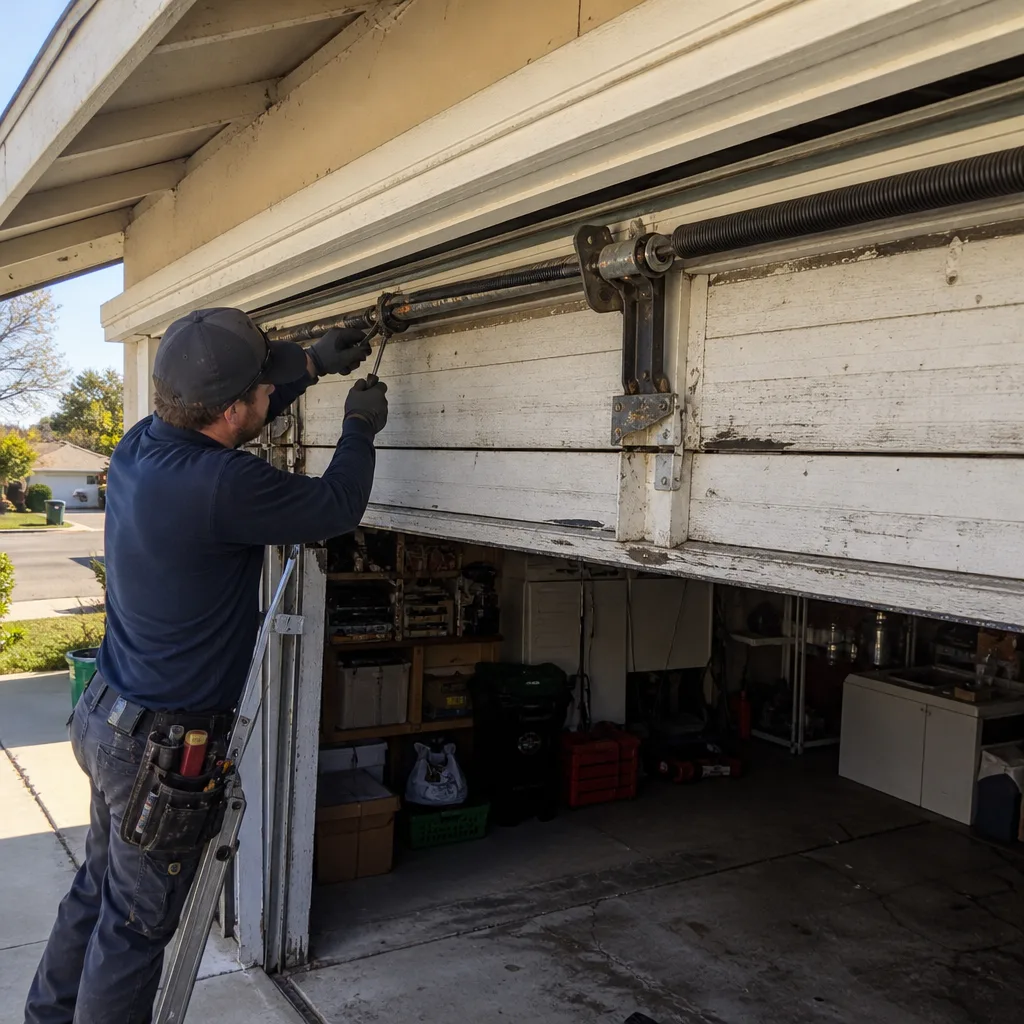 Before
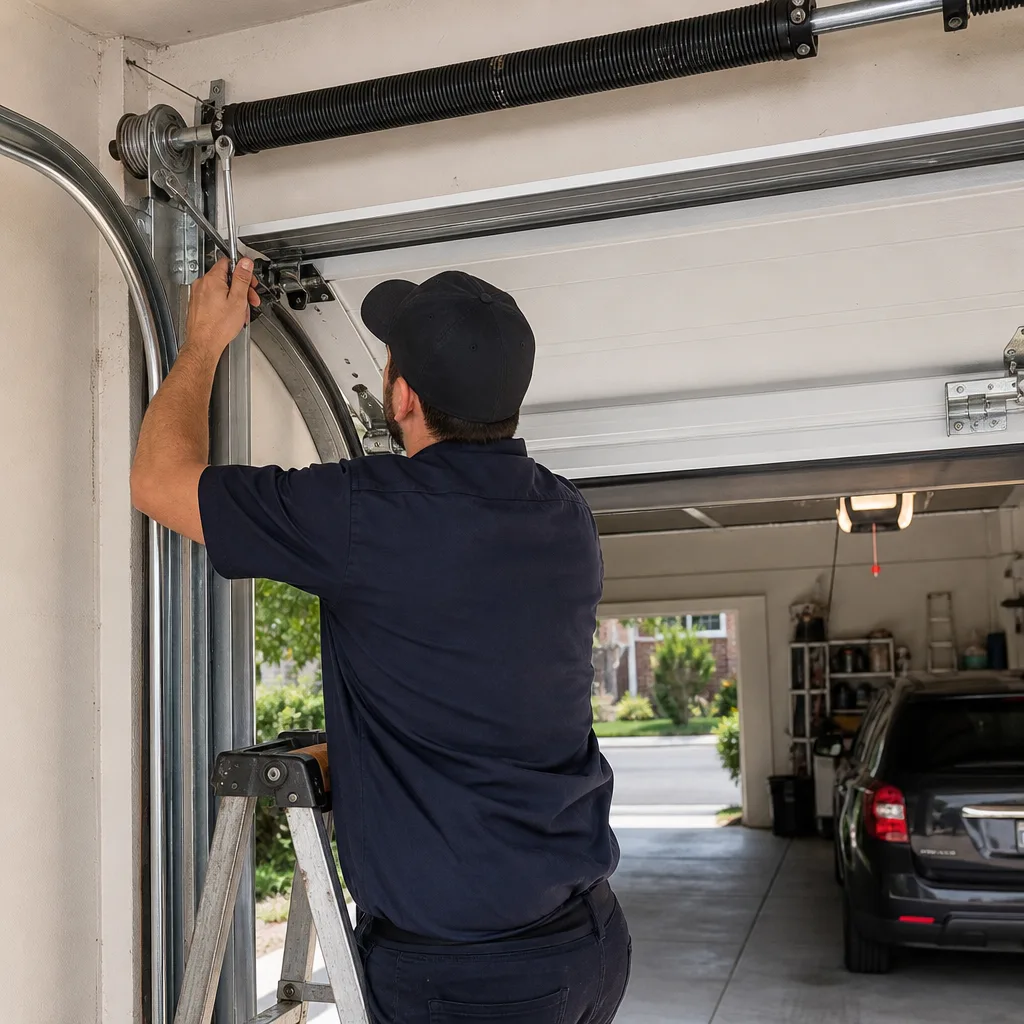 After
After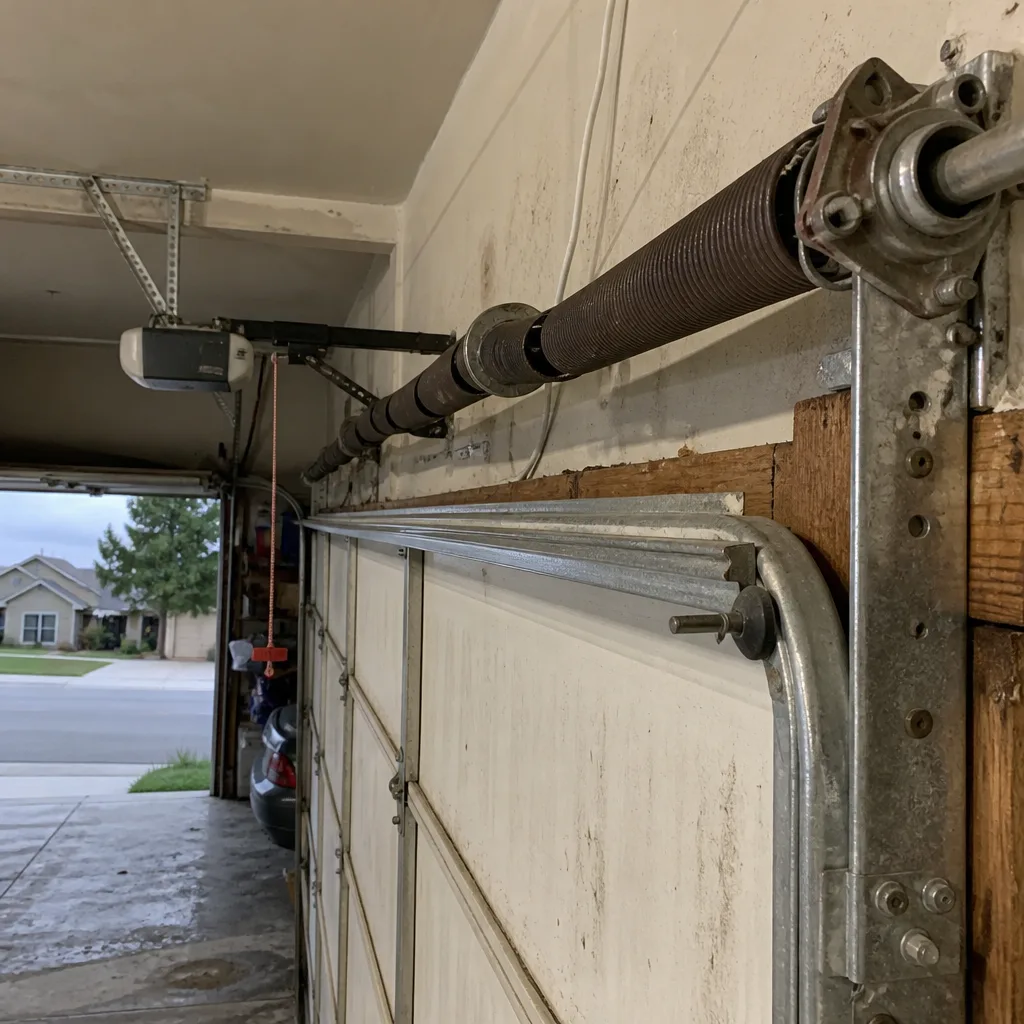 Before
 After
After Before
 After
After